

Key Takeaways
Selling a house as-is typically results in a 5-15% loss compared to market value, but this strategic decision can make financial sense in specific situations.
• Expect 5-15% below market value when selling as-is, with cash buyers offering around 70% of after-repair value minus renovation costs.
• Six key factors determine your loss: home condition, buyer type, location desirability, repair costs, market conditions, and timeline urgency.
• Cash buyers close in 7-10 days versus months for traditional sales, making as-is sales ideal for urgent relocations or financial pressures.
• Major structural issues favor as-is sales when repair costs exceed your budget or timeline, as only investors typically purchase these properties.
• Strong seller's markets reduce discounts to 8-12% instead of 20-25%, as low inventory makes buyers more willing to overlook flaws.
The key is calculating whether repair costs plus holding expenses exceed the as-is discount. When facing tight timelines, limited budgets, or major structural problems, accepting the discount often proves more profitable than attempting repairs and traditional sales. Understanding how much you lose selling a house as is comes down to one clear answer: homeowners typically lose between 5-15% of their home's potential market value. This percentage accounts for the reduced offer prices you'll receive at the time buyers factor in needed repairs and renovations. In fact, 90% of buyers prefer turnkey homes that are move-in ready, which affects your selling price.
At the time you sell house as-is, you're trading convenience and speed to get a lower sale price. The actual loss depends on your home's condition and buyer type. This piece breaks down what affects your specific loss percentage, compares real numbers between as-is and traditional sales, and helps you determine whether selling my house as is makes financial sense for your situation.
What Does the 5-15% Loss Mean When You Sell a House As-Is
Image Source: SOLD.com
Properties listed as-is tend to be priced lower, owing to buyer expectations around repair costs and risk. The 5-15% figure represents a conservative estimate, but the actual discount range varies by a lot based on multiple factors.
Where the 5-15% Range Comes From
Industry research provides concrete data on as-is discounts. According to Zillow and multiple MLS market analyzes, as-is properties sell for 15-25% less than comparable move-in-ready homes in the same neighborhood. That translates to a reduction of $60,000 to $100,000 for a home valued at $400,000.
The discount isn't arbitrary. Buyers purchasing as-is properties calculate their offers using a formula: fair market value minus estimated repair costs minus a risk premium minus their desired profit. This explains why you'll see such variation in offers depending on who's buying your property.
Cash buyers and investors who fix and flip houses use the 70% Rule, paying about 70% of the property's after-repair value minus renovation costs. A cash buyer might offer around $240,000 if your home's after-repair value is $400,000 and repairs cost $40,000. Meanwhile, iBuyers pay 85-95% of your home's market value, then deduct service fees of 5-10%.
How This Compares to Traditional Sales
The financial gap becomes clear when you sell a house as-is versus making repairs first. Properties in need of work could sell at 15-20% below market value in balanced or buyer-favoring markets. Sellers who make strategic improvements often recoup value though. One case involved a seller who invested $5,000 in minor improvements and received an offer $55,000 higher than the previous as-is offer, netting 13.3% more even after accounting for improvement costs.
What Affects Your Specific Loss Percentage
Your discount depends on property condition, local market dynamics, and buyer type. The as-is discount may narrow to 8-12% rather than 20-25% in a strong seller's market with low inventory. As-is properties face steeper discounts in buyer's markets with high inventory because buyers have plenty of move-in-ready alternatives. Location matters especially when you have your home sitting in a desirable neighborhood or on prime property, as condition matters less when location is paramount.
6 Key Factors That Determine How Much You Lose Selling a House As-Is

Image Source: The Jamil Brothers Realty Group
Six distinct variables determine your exact discount within the 5-15% range when you sell house as-is. Understanding these factors helps you anticipate offers and decide whether selling my house as is makes financial sense.
Your Home's Current Condition
Better condition means closer to market value when selling as-is. Homes requiring major overhauls receive much lower offers because buyers need to invest time, effort and upfront cash. Investors try to make more profit on houses requiring major repairs than on homes needing minor updates. Buyers can overlook cosmetic imperfections like worn carpeting or outdated fixtures. Structural damage, water intrusion, or failed systems shrink your buyer pool to investors and flippers.
Type of Buyer (Investor vs. End Buyer)
Buyer type affects your offer. Roughly 90% of buyers prefer turnkey homes ready to move in nowadays. When you sell to someone planning to occupy the house, they become suspicious and worry about hidden issues. This results in fewer offers or lower prices. Homeowners can expect to net 75% to 95% of the home's after-repair value when selling to cash buying companies, depending on condition.
Location and Neighborhood Desirability
Highly rated schools and low crime rates boost buyer demand and sale prices. Houses in crime-prone areas sell up to 10% lower than comparable homes just blocks away. Heavy traffic or loud road noise can deter buyers and lower sales prices up to 20% compared to homes on quiet streets.
Needed Repairs and Their Costs
Estimate repair costs, then factor in a "risk cushion" for the buyer. Most buyers lower their offer not just to cover repair costs but to give themselves a buffer in case surprises appear. This cushion often adds another 10% to 15% discount.
Current Real Estate Market Conditions
Strong seller's markets shrink or eliminate the offer price gap between as-is and conventional sales. Even as-is homes in terrible condition were selling during the pandemic-era seller's market because of inventory shortages.
Your Timeline and Urgency to Sell
Sellers facing tight timelines are more likely to accept lower prices for quicker closes. When you just need to sell within weeks rather than months, your listing price should reflect that urgency. Buyers aware of your situation may negotiate harder.
Real Numbers: $400,000 Home Comparison Table
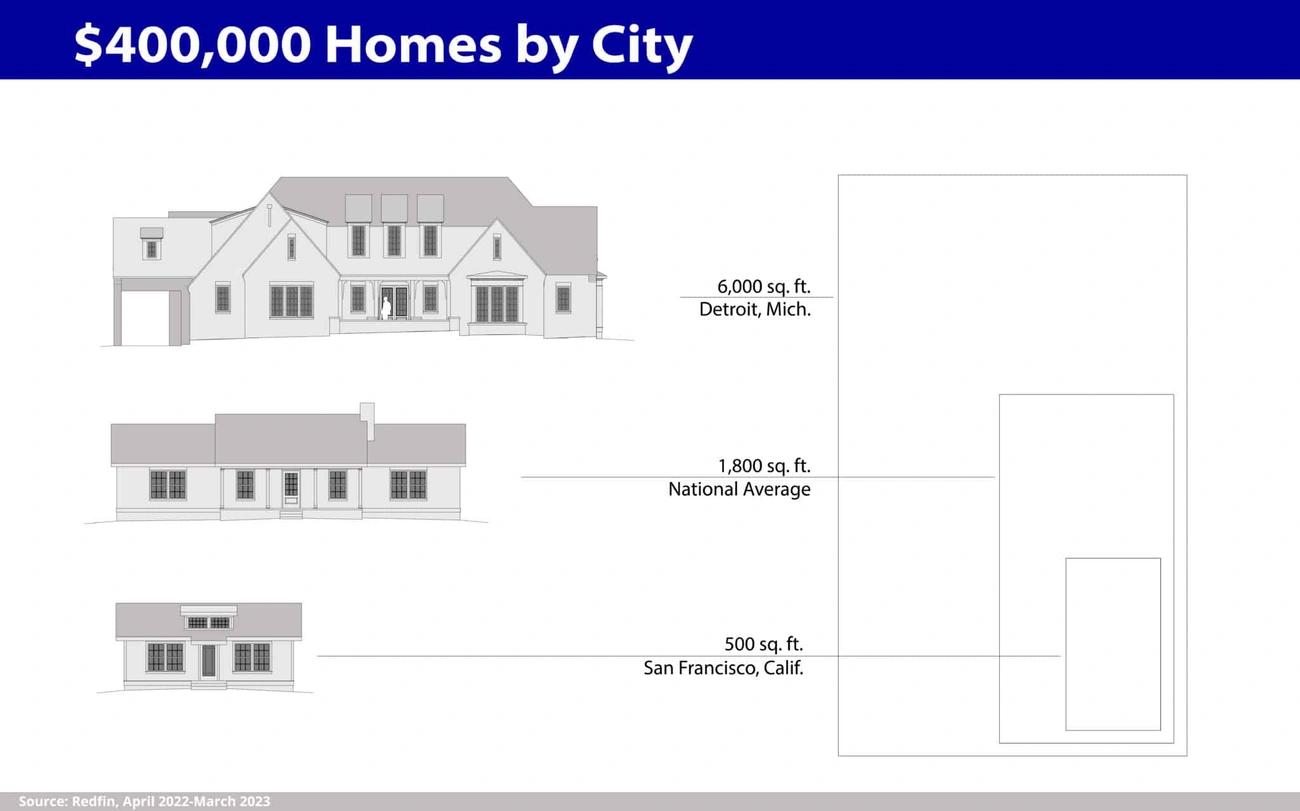 Comparison table of $400,000 home sale
Image Source: This Old House
A $400,000 home shows you exactly how much you lose selling house as-is versus making repairs. The numbers reveal big differences depending on your chosen path.
Selling As-Is to a Cash Buyer
Real estate investors using the 70% Rule would offer approximately $240,000 for your $400,000 home if repairs cost $40,000. They calculate this as: after-repair value × 0.7, minus renovation costs. iBuyers present a different model and typically pay 85-95% of market value ($340,000-$380,000). They then deduct service fees of 5-10% ($20,000-$30,000). Your net proceeds come to $330,000-$360,000. Cash buyers generally pay 10% less than mortgage buyers.
Selling After Making Repairs
Your property needs $30,000 in roof and plumbing work. You might list around $370,000 after completing repairs. Traditional sales require paying realtor commission and closing fees. For a $125,000 home example, repairs average $20,000-$40,000. Sellers net around $85,000 after all costs instead of the full asking price.
The True Cost Difference Breakdown
You should compare how much you could net under different selling options before deciding to sell your home as-is. Our free home value estimator shows what your property might be worth in today's market.
When Selling Your House As-Is Actually Makes Financial Sense
Image Source: Ramsey Solutions
Accepting the 5-15% loss when you sell my house as is becomes financially sound in specific scenarios where the alternatives cost more in time, money, or stress.
You Just Need to Sell Quickly
Job relocations, divorce proceedings, or foreclosure threats create tight timelines where speed matters most. Cash buyers can close in as little as 7-10 days and give you freedom and flexibility at the time you need it. Military families receiving permanent change of station orders often lack time or funds to complete repairs before moving.
Repair Costs Exceed Your Budget
Selling in current condition may be your best option if you don't have resources to invest in major repairs or can't take on financial risk. The quick cash from a fast sale could help you pay off debt, relocate, or invest in more stable housing.
You're Dealing with Major Structural Issues
Selling as-is is often smarter at the time repair estimates exceed your budget or timeline . Foundation problems, major structural damage, or extensive system failures appeal to investors and contractors who are comfortable with bigger projects.
The Market Favors As-Is Sales
Low inventory in a seller's market creates ideal conditions. Buyers become more willing to overlook flaws just to secure a home. Spring and summer bring high demand, and buyers take more risks on fixer-uppers during these seasons.
You Want to Avoid Sale Complications
Inherited properties, estate sales, or properties located far away work well with as-is transactions. This approach eliminates renovation uncertainty and contractor delays beyond financial pressure situations.
Conclusion
Selling your house as-is means accepting a 5-15% loss compared to market value. This varies based on condition and buyer type. Balance the discount against repair costs, your timeline, and available resources. Calculate the numbers for your specific situation before choosing a path. Understanding these percentages helps you negotiate confidently and maximize your net proceeds, whether you sell as-is or make improvements first.
FAQs
Q1. Is it better to fix up a house before selling or sell it as-is? The best approach depends on your situation. Selling as-is offers speed and convenience but typically results in 5-15% less than market value. Making strategic repairs can increase your sale price significantly—sometimes by tens of thousands of dollars—but requires upfront investment and time. Consider your budget, timeline, and the extent of needed repairs when deciding.
Q2. Why do as-is homes sell for less money? As-is homes sell for less because buyers factor in repair costs, risk of hidden problems, and their desired profit margin when making offers. Cash buyers and investors typically use formulas like the 70% Rule, while most traditional buyers prefer move-in-ready homes. The discount compensates buyers for taking on the responsibility and uncertainty of needed repairs.
Q3. Does selling as-is limit my pool of potential buyers? Yes, selling as-is significantly reduces your buyer pool. About 90% of buyers prefer turnkey, move-in-ready homes. Many financing options like FHA, VA, and USDA loans require properties to meet certain condition standards, eliminating those buyers from consideration. Your primary buyers will be cash investors, house flippers, or buyers with substantial renovation budgets.
Q4. When does selling a house as-is make financial sense? Selling as-is makes sense when you need to sell quickly (within weeks), can't afford major repairs, face structural issues beyond your budget, or are dealing with inherited or distant properties. It's also advantageous in strong seller's markets where inventory is low and buyers are more willing to accept properties needing work.
Q5. Can I still negotiate after listing my home as-is? Yes, "as-is" doesn't eliminate all negotiation. Even with as-is listings, buyers typically conduct inspections and may request price reductions or credits based on their findings. You're not obligated to agree, but some sellers offer reasonable concessions to facilitate the sale while still avoiding the hassle of making repairs themselves.
Sources & Data References
- HomeLight – How Much Do You Lose Selling a House As-Is?
https://www.homelight.com/blog/how-much-do-you-lose-selling-a-house-as-is/ - Rocket Mortgage – What Does Selling a House As-Is Mean?
https://www.rocketmortgage.com/learn/selling-as-is - U.S. News Real Estate – How Selling a House As-Is Works
https://realestate.usnews.com/real-estate/articles/how-does-selling-a-house-as-is-work - RE/MAX – Pros and Cons of Selling As-Is
https://blog.remax.com/selling-a-home-as-is-pros-and-cons-for-homeowners/ - University of California San Diego – Cash Buyers Pay ~10% Less Than Mortgage Buyers
https://today.ucsd.edu/story/all-cash-home-buyers-pay-10-less-than-mortgage-buyers