
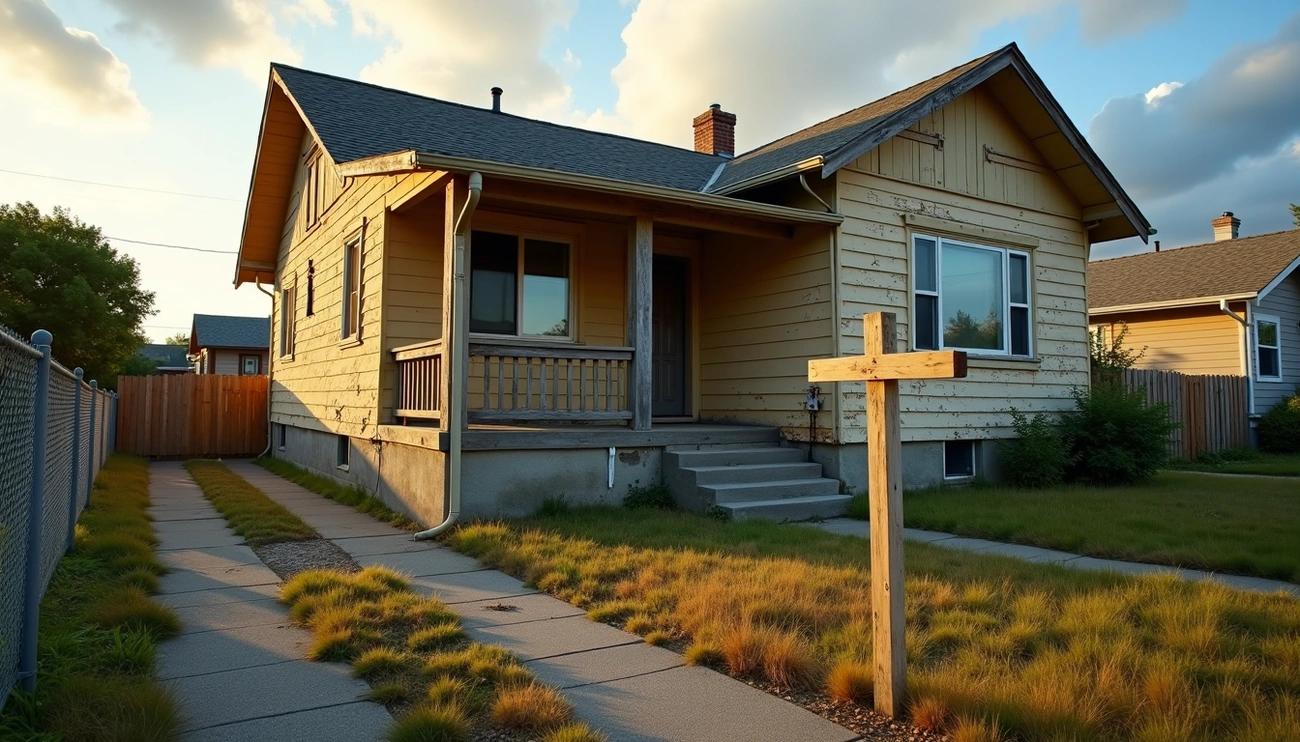

About 38% of the current housing supply was built before 1970. Millions of homes need the most important updates.
But here's the thing: 78% of homeowners exceeded their renovation budgets recently, with 44% going over by at least $5,000. This is a big deal as it means that selling a house in poor condition without sinking money into repairs makes financial sense for many homeowners.
Your house may need major repairs or just cosmetic updates. You can sell homes as is and skip the renovation headaches. You have several practical options, from working with cash buyers to listing on the open market.
This piece shows you exactly how to sell a house in poor condition without repairs or renovations.
Understanding What Poor Condition Really Means
A house in poor condition extends beyond outdated decor. These properties present issues that affect safety, livability, or knowing how to secure traditional financing.
The term "poor condition" covers a spectrum. One end has homes that need fresh paint and new flooring. The other extreme includes properties deemed unsafe to occupy and potentially facing demolition.
Uninhabitable Properties
Uninhabitable homes face severe problems that render them unsafe to live in. These properties often get labeled as teardowns.
Severe roof or foundation damage tops the list of critical issues. Broken HVAC systems leave homes without climate control. Major plumbing failures create unsanitary conditions. Faulty electrical wiring poses fire hazards.
Extensive pest infestations add another layer of problems. Termites, rodents and carpenter ants damage wood structures and wiring. The presence of hazardous materials like black mold or asbestos makes properties especially dangerous.
These homes attract mostly cash buyers and real estate investors who seek deeply discounted properties. Investors offer 65% to 70% of the property's after-repair value (ARV), with the median at 67.5%. A home valued at $500,000 after repairs will get offers around $337,500.
Homes Needing Major Repairs
Properties in this category remain habitable but require substantial work. Electrical faults, plumbing issues and damaged roofs fall into this classification.
Foundation problems present serious concerns without making homes immediately uninhabitable. Outdated but operational HVAC systems need replacement soon. Homes affected by excessive hoarding or neglect from accumulated dirt and grime qualify here as well.
Water damage creates cascading problems. Leaky roofs, broken pipes or flooded basements leave stains and warped materials. Water issues spread over time and create bigger complications.
Mold and mildew concentrate in damp areas like basements and bathrooms. These conditions affect air quality and pose health risks that require disclosure during real estate transactions.
Outdated or unsafe systems deter many buyers. Old wiring, corroded plumbing or failing HVAC systems represent big-ticket repairs. Exterior deterioration signals neglect through peeling paint or cracked siding. Roof damage raises financing concerns.
Unpermitted work adds another complication. DIY additions or remodels completed without proper permits lower appraisals and delay closings. They create insurance headaches.
Despite these deficiencies, homes needing major repairs attract iBuyers and investors who see value in purchasing at a discount.
Properties Requiring Cosmetic Updates
Outdated homes that show wear and tear often have solid structural foundations. Their flaws remain purely cosmetic.
Kitchen renovations, bathroom updates and new flooring represent typical cosmetic needs. Updated finishes and landscaping improve appearance without affecting habitability.
These updates differ from structural repairs. Structural repairs address components that bear load, resist lateral forces or maintain building envelope integrity. Foundation walls, load-bearing walls and roof rafters fall into structural classifications.
Cosmetic repairs tackle surface or finish-layer defects that don't affect load paths or structural continuity. Painting, drywall patching over stable substrates and flooring replacement remain cosmetic. Cabinet refinishing and fixture replacement where no structural framing changes occur also stay cosmetic.
Cosmetic improvements aren't dealbreakers. These updates don't affect mortgage approvals, which attracts a broader range of buyers.
The difference between structural and cosmetic repairs carries weight. A cracked interior wall may be cosmetic if limited to drywall compound over an intact stud frame. But it becomes structural if the crack propagates through masonry or indicates differential foundation settlement.
Why Sell Your House in Poor Condition Without Repairs
A home that needs repairs just needs time, money and energy that many homeowners don't have. The decision to sell house as is for cash often stems from practical realities rather than preference.
No Time for Renovations
Repairs stretch timelines in ways most sellers don't anticipate. Everything fixed can take weeks or even months. Contractors often carry backlogs of work. Waiting for them to start your project adds further delays.
Military families face tight constraints. A permanent change of station (PCS) order arrives and the house needs selling faster. The property might be in good condition, but time doesn't exist for repairs or updates.
Job relocations create pressures like these. Your new employer expects you in another city within weeks. Repairs coordinated from a distance become impractical.
Inherited properties present challenges. You're in your forties and manage a demanding career. A fixer-upper project for a home you didn't live in feels overwhelming. Contractors and work supervised from afar compound the difficulty.
Repairs managed while you live elsewhere means you pay rent or carry costs on the property you've already left. These dual expenses drain savings.
Limited Budget for Repairs
Financial constraints drive most as-is sales. You lack the cash to revamp the kitchen or redo the flooring. You sell to buyers prepared to invest.
Money poured into remodeling isn't feasible for many homeowners. Medical emergencies, job loss, impending bankruptcy or other financial crises create situations where an as-is sale provides needed funds.
The upfront costs of materials and labor add up faster. You might spend $40,000 on a new kitchen only to raise the selling price by $25,000. That investment doesn't pay off.
Repair choices carry uncertainty. You could spend $5,000 on new carpet and then drive by two weeks after closing to see it piled on the roadside because buyers wanted hardwood floors instead. Which repairs buyers will value becomes expensive guesswork.
Avoiding Cost Overruns and Delays
Budget overruns plague home renovations. Recent data shows 78% of homeowners exceeded their renovation budgets, with 44% going over by at least $5,000. These unexpected expenses create financial strain.
Homes sold as is sidestep this uncertainty. You eliminate the risk of projects that spiral beyond original estimates.
Renovation delays extend beyond contractor schedules. Permits secured, design decisions made and work supervised demands constant attention. Schedules coordinated and finances managed becomes time-consuming and overwhelming.
Contractors create stress many sellers want to avoid. Issues found during repairs lead to additional work and costs. A simple roof patch reveals water damage that requires extensive remediation.
Quick Sale Requirements
Foreclosure looms as a concern. You need to avoid late fees, fines and credit damage. Cash buyers often close in as little as 7 to 10 days. Traditional sales can't match this speed.
Divorce settlements require asset division. Lengthy real estate transactions complicate already difficult situations. A house in poor condition sold without repairs accelerates the process.
Safety hazards make properties unlivable. Broken furnaces or leaking roofs cost substantial sums to fix. Major problems like these make an as-is sale to investors the practical choice.
Home-buying companies and cash buyers stand ready to purchase properties in any condition. Traditional buyers need move-in ready homes. Investors see value in fixer-uppers. They handle repairs after closing and remove that burden from your shoulders.
The equation becomes straightforward. You receive less money but gain access to cash, avoid upfront costs and skip months of renovation headaches. For many who face urgent circumstances, this tradeoff delivers what's needed.
Selling Options for Homes in Poor Condition
Four distinct pathways exist to sell a house in poor condition. Each option targets different buyer types and offers unique tradeoffs between speed, convenience, and sale price.
Sell House As Is for Cash to Investors
Cash investors purchase properties direct from homeowners, as-is condition and all. Most cash sales close in as little as 7 to 14 days, compared to the traditional 30-plus day process.
Real estate investment companies bring simplified operations and reliable closing timelines. They renovate properties for resale or convert them into rental units. Individual real estate investors operate with smaller teams and capital reserves, but they show more flexibility in negotiations.
The speed comes from eliminating financing contingencies. Traditional buyers rely on mortgage approvals that can fall through. Cash buyers have funds available right away, which reduces the risk of deals collapsing.
You skip repairs. Investors buy homes as-is and save you time and money on costly updates. No showings, no open houses, and fewer negotiations create a smoother process.
The drawback centers on pricing. Investors purchase properties at discounted prices to maximize their profits. You may not receive full market value since they offer convenience and speed in exchange for lower purchase prices.
Scams pose real risks. Some individuals posing as cash buyers are scammers looking for easy targets. Always verify proof of funds before signing contracts. Unverified buyers may not have capital available. Pressure tactics that rush you into decisions without review time signal red flags.
This option provides relief for inherited properties. You're managing a demanding career and facing a fixer-upper you never lived in. Selling to a cash investor in 10 days eliminates months of coordinating contractors from a distance.
List As-Is on the Open Market
Selling distressed properties doesn't require choosing quick-close alternatives. Listing as-is on the open market attracts buyers seeking fixer-uppers at reduced prices.
Real estate auctions offer another route. Auction houses handle marketing, set up bidding processes, and make sales happen on the spot. Many bidders are investors or flippers who pay in cash, which speeds up closing and reduces complications.
You lose some control over final sale price. Auctions attract cash buyers and eliminate lengthy negotiations, though.
Working with iBuyers
iBuyers are tech-driven companies that make instant offers and streamline the sale process. These algorithm-driven businesses provide fast cash offers based on automated property valuations.
The process happens online, mostly or entirely. You receive near-instant cash offers and can close much faster than traditional buyers.
iBuyers charge service fees, around 5% to 6%. National average real estate commissions range from 3% to 5.8% following recent changes, by contrast.
Some iBuyers perform inspections and may reduce their offer price based on the home's condition. Most allow you to sell as-is without preparing or repairing the house.
Their offers tend closer to market value than house flippers who use the 70% after-repair-value standard. iBuyers buy and resell homes at higher volume with lower profit margins per flip, so they pay more than traditional investors.
iBuyers prefer homes in good condition requiring minimal repairs. Their offers may be higher than flippers or wholesalers but still below market value.
Using Real Estate Wholesalers
Wholesalers don't buy homes outright. They contract with sellers for the property, find parties interested in buying it, and sell their rights to the contract.
The process starts when you sign a wholesale real estate assignment contract. This doesn't provide the wholesaler with title to your property but gives them control while they find an investor to buy your house.
Wholesalers target distressed properties whose owners wish to avoid further investment. You're motivated to sell and don't want to work with a real estate agent.
The wholesaler promises to sell your property for a specified minimum price within a specific timeframe. To cite an instance, a contract may state the wholesaler agrees to sell a property for $200,000 within three months.
The wholesaler seeks buyers willing to pay more than the contract stipulates. The contract sets your selling price at $200,000, and the wholesaler attempts selling it for $225,000. The $25,000 spread becomes the wholesaler's profit once the deal closes.
Wholesalers find distressed off-market properties to sell for owners who are unwilling or unable to invest time preparing for typical sales. End buyers are real estate rehabbers or other investors.
Wholesalers offer the lowest prices since they just need to profit from the contract transfer. Deals close quickly, within weeks.
How to Price a House in Poor Condition
Pricing strategies for selling a house in poor condition differ fundamentally from traditional sales. You need specific calculations that account for needed repairs while attracting serious buyers.
Understanding After-Repair Value (ARV)
After-Repair Value represents your property's projected market value once all renovations finish. Real estate investors rely on ARV to determine maximum purchase prices.
The simple formula adds your purchase price to renovation costs . Buy a house at $180,000, plan $50,000 in repairs, and your ARV becomes $230,000.
But the more accurate method gets into comparable sales of renovated homes in your area. Find three to six similar properties that sold within the last 90 days. Match on condition, size, age, and location. Calculate the average price per square foot, then multiply by your property's square footage.
Real estate investors use the 70% rule as a quick filter. The formula reads: Maximum Allowable Offer = (ARV × 70%) – Estimated Renovation Cost. This preserves profit margins while covering holding costs and transaction fees.
Repair Cost Considerations
Accurate repair cost estimates protect you from overpricing your property. General contractors budget $25 to $35 per square foot for standard flips. Lower-end homes need around $20 per square foot, while high-end properties require $40 or more.
Add a 10% to 20% contingency buffer for unexpected issues. Older properties warrant the higher percentage. Hidden problems like dry rot, pest damage, or inadequate foundations add tens of thousands of dollars to totals.
Walk through your property with a checklist. Note roof age, HVAC condition, water damage, and structural concerns. Text contractor contacts for rough estimates on major items. A 20% contingency on $15,000 in repairs brings your total to $18,000.
How to Set Competitive Pricing
Three pricing models apply when selling a home that needs repairs. The discounted market value model prices your home 5% to 20% below comparable listings, depending on repair extent. Similar homes sell for $400,000 but yours needs $30,000 in roof and plumbing work, so list around $370,000.
The investor pricing model follows the 70% rule. On a $400,000 ARV property that requires $40,000 in repairs, cash buyers offer around $240,000. That's $400,000 × 0.7, minus $40,000 in renovation costs.
iBuyer pricing falls between these extremes. iBuyers pay 85% to 95% of market value, then deduct 5% to 10% service fees. Expect offers between $340,000 and $380,000 for a $400,000 home, minus $20,000 to $30,000 in fees, netting you $330,000 to $360,000.
How to Avoid Lowball Offers
Lowball offers fall 20% to 25% below your asking price, though definitions vary by market. Even 20% under might qualify as aggressive in areas with limited inventory.
Counter instead of rejecting outright. You lose nothing by countering if the initial offer seems unacceptable. Back your counteroffer with comparable sales data that justify your price. Show recent sales of similar homes and highlight your property's unique features.
Assess offers beyond just price. Cash buyers offering quick closings, waived contingencies, or flexible move-out dates add value that offsets lower numbers . A 10% reduction with a 15-day close beats a higher offer that requires 60 days and extensive contingencies.
Legal Requirements When Selling a Home That Needs Repairs
Selling house as is for cash doesn't eliminate your legal disclosure obligations. You must still reveal known defects, even when buyers purchase properties without repairs.
Mandatory Property Disclosures
The as-is clause protects you from repair obligations but doesn't absolve disclosure requirements. Material defects are issues that substantially affect property value, safety or habitability.
Common examples include structural problems like foundation cracks or roof damage, water damage or mold, and termite or pest infestations. Lead paint, asbestos, plumbing and electrical issues also fall into this category. You must disclose any history of flooding or drainage problems.
Homes built before 1978 carry federal requirements. The Lead Paint Disclosure Rule requires you to disclose lead paint presence. Failure results in substantial penalties.
State-Specific Disclosure Laws
California enforces strict disclosure requirements. Sellers must provide a Transfer Disclosure Statement (TDS) that covers structural information, appliances, room additions, damage and neighborhood noise problems. The Natural Hazard Disclosure Statement addresses flood zones, earthquake fault zones and fire hazard areas.
Massachusetts follows the caveat emptor doctrine from Swinton v. Whitinsville Savings Bank (1942). But sellers must provide complete and truthful information when buyers ask specific questions about property condition.
Missouri and Kansas lack statewide statutory disclosure forms, though custom contracts modify expectations. Sellers must still avoid fraud or intentional concealment whatever the formal requirements.
Transparency About Known Issues
Prospective buyers may ask specific questions about water damage or septic system condition. You're obligated by law to disclose what you know completely. Offering information about specific issues requires complete and accurate details.
Misleading or incomplete information results in liability for misrepresentation. Buyers may rescind the contract or sue for damages if you knowingly withhold material information. Courts award repair costs, diminution in property value or punitive damages in egregious cases.
Minimum Property Requirements for Financing
FHA loans require homes meet minimum property standards that ensure safe, structurally sound and hazard-free conditions. The roof must have at least two years of life remaining. Peeling paint in pre-1978 homes fails FHA appraisals due to lead-based paint concerns.
Properties must have functional major systems that include heating, electrical and plumbing. There can be no wood-destroying insect infestation. Homes that fail these standards require repairs before FHA financing approval.
Finding the Right Buyers for Your Property
Matching your property with buyers who value fixer-uppers requires targeted strategies. Cash buyers represent 26% of the marketplace , while nearly 30% of all home purchases happen with cash offers.
Targeting Cash Buyers and Real Estate Investors
Investors focus strictly on numbers. They have no emotional attachment to properties. Search for home flippers on Google or look for "We Buy Houses" signs around your neighborhood. Contact local real estate investment clubs where cash buyers gather. These buyers close fast and purchase properties in any condition.
Marketing to First-Time Buyers Looking for Fixer-Uppers
First-time buyers choose fixer-uppers to expand their options beyond turn-key homes competing buyers chase. They can purchase for less than expected or negotiate favorable terms with sellers. Market your property's potential rather than current state. Use phrases like "investment opportunity," "blank canvas," and "untapped potential" in listings.
Working with Experienced Real Estate Agents
Agents familiar with distressed properties provide valuable market expertise and negotiation skills. They connect you with investor networks and guide pricing strategies. Ask about their experience selling homes needing repairs, commission rates and a social-first marketing approach.
Key Staging and Presentation Tips
Personal mementos should go. Buyers need to imagine their own lives in the space. Surfaces need decluttering, and avoid shoving items into closets since buyers check storage spaces. The exterior needs a good cleaning. Dirty, unkempt appearances drive buyers away before they see inside. Virtual staging for key rooms helps buyers visualize finished possibilities .
Conclusion
You have multiple practical pathways to sell your house in poor condition without spending a dime on repairs. Cash buyers close in days. iBuyers offer convenience. Listing as-is attracts fixer-upper enthusiasts.
The right choice depends on your timeline and priorities. Facing foreclosure? Cash investors deliver speed. Need better pricing? iBuyers balance value and convenience.
Without doubt, selling as-is means accepting lower offers than fully renovated homes command. But you avoid renovation costs and months of uncertainty.
Choose your selling method and price competitively. Disclose known issues honestly. Your house will sell, whatever the condition. Take action today and move forward with confidence.
Key Takeaways
Selling a house in poor condition without repairs is not only possible but often financially smart, especially when 78% of homeowners exceed renovation budgets and face unexpected delays.
• Cash buyers and investors offer the fastest path to sale, closing in 7-14 days compared to traditional 30+ day processes, though typically at 65-70% of after-repair value.
• Price strategically using the 70% rule: Maximum offer = (After-Repair Value × 70%) - Estimated Repair Costs to attract serious investors while protecting your interests.
• Legal disclosure requirements remain mandatory even in as-is sales - you must reveal known defects, structural issues, and material problems to avoid future liability.
• Multiple selling options exist beyond cash buyers, including iBuyers (85-95% market value minus fees), listing as-is on open market, and working with wholesalers for quick transactions.
• Target the right buyer type for your situation - cash investors for speed, first-time buyers seeking fixer-uppers for better pricing, or iBuyers for convenience and moderate value.
The key is matching your timeline and financial needs with the appropriate selling method while maintaining transparency about property condition throughout the process.
FAQs
Q1. Is it worth fixing up an old house before selling, or should I just sell as-is? In most cases, selling as-is makes more financial sense. Recent data shows 78% of homeowners exceed their renovation budgets, with 44% going over by at least $5,000. Additionally, you might spend $40,000 on kitchen updates only to increase your selling price by $25,000, resulting in a net loss. Unless you have specific trade skills, ample time, and cash reserves, listing your property as-is and pricing it accordingly typically delivers better results than investing in extensive repairs.
Q2. What types of buyers are interested in purchasing homes that need repairs? Several buyer types actively seek properties needing work. Cash buyers and real estate investors represent about 26-30% of the market and specifically target fixer-uppers for renovation or rental purposes. First-time homebuyers often choose properties needing updates to access lower price points and avoid competition for move-in ready homes. iBuyers and real estate wholesalers also purchase homes in poor condition, though at different price points and with varying timelines.
Q3. How much less should I expect to receive when selling a house in poor condition? Pricing depends on your chosen selling method. Cash investors typically offer 65-70% of the after-repair value (ARV) minus estimated repair costs. For example, on a home worth $500,000 after repairs requiring $40,000 in work, expect offers around $310,000-$337,500. iBuyers generally pay 85-95% of market value but charge 5-10% service fees. Listing as-is on the open market usually means pricing 5-20% below comparable homes, depending on the extent of needed repairs.
Q4. Do I still need to disclose problems if I'm selling my house as-is? Yes, selling as-is does not eliminate your legal disclosure obligations. You must reveal all known material defects that significantly affect property value, safety, or habitability. This includes structural problems, water damage, mold, pest infestations, and issues with major systems. Homes built before 1978 require federal lead paint disclosure. Failing to disclose known issues can result in buyers rescinding contracts or suing for damages, even in as-is transactions.
Q5. What minimal improvements should I make before selling a house in poor condition? Focus on low-cost improvements that maximize curb appeal and presentation. Deep clean the entire property, clear clutter, and remove personal items so buyers can envision themselves in the space. Clean up the yard through mowing, trimming overgrown bushes, and basic landscaping. Complete or remove any half-finished DIY projects that signal neglect. These cosmetic touches typically cost under $1,000 but significantly impact buyer perception without requiring you to invest in major renovations that may not return their value.
References
1. https://www.homelight.com/blog/selling-a-house-as-is/
2. https://listwithclever.com/real-estate-blog/selling-house-poor-condition/
3. https://www.homes.com/learn/distressed-property-guide/
4. https://www.nar.realtor/magazine/real-estate-news/sales-marketing/6-ways-to-help-home-buyers-compete-with-investors
5. https://flipsmrt.com/blog/estimating-repair-costs
6. https://www.wallstreetprep.com/knowledge/after-repair-value-arv/
7. https://hunterlawgrouppa.com/blog/sellers-disclosure-issues-in-real-estate-an-faq-for-buyers-sellers-and-advisors/
8. https://www.cote-law.com/as-is-clause/